The History of Playing Cards
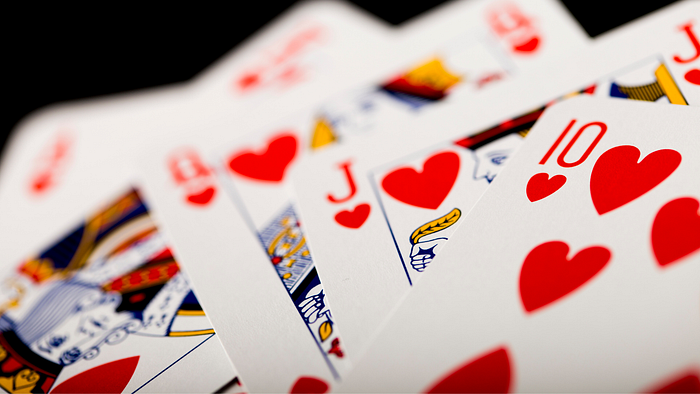
Playing cards first appeared in Europe in the 15th century. Prior to this, card games were played with dice. However, by the end of that century, card games were being played with playing cards as well. In fact, some historians believe that playing cards were created as a method for gambling instead of for entertainment purposes. Nevertheless, even if they weren’t originally intended for gaming purposes, once people started playing them for that purpose we know that a new pastime had been born! The exact origin of playing cards is debatable. Some believe that Chinese fortune-telling cards made their way to Europe through Marco Polo, but this may be unlikely given how little time those two would have had together between their journeys. Others believe that the Chinese invented playing cards around 200 AD (as they did with many other things). Other theories suggest that Arabs or even Indians first used playing cards, but these are unsubstantiated and seem unlikely given how quickly European explorers spread throughout Asia at the time. And then there are those who believe that Marco Polo brought the game back from China to Italy around 1300 AD; however, there is no definitive evidence for this theory either. Whatever its origins, it seems clear that play with cards was widespread in Europe by 1425 when references to “passe-cartes” (French for “playing-cards”) appear in Paris and London court records. END
What are Playing Cards Made of?
The history of playing cards starts in Europe in the 15th century. They were first used as a means for gambling but soon became a pastime that we still enjoy today. Playing cards are made from paper, cloth, and wood and are not known for being very durable objects. Playing cards are typically between 8 to 10 inches in length and 3.5 to 4 inches wide. The cards themselves can be made from many different materials such as plastic or linen with the notable exception of whalebone which was used until the early 20th century when it was replaced by celluloid. At their widest point, playing cards are approximately 2 inches across with the edges being slightly thinner to allow them to easily fit into a card case or deck box. There is no unified standard for how many suits each card typically has, but there is an average of four suits per deck of playing cards which is what most people think of when they think “deck of playing cards.”
Playing Card Dimensions
The standard playing card size is 2.5 inches by 3.5 inches, with a thickness of 1/16 inch. This makes it easier to shuffle and hold in one hand while also being easy to read from across the table or through a window or door. Playing cards are usually made from either paper or plastic; however, leather, felt and metal have also been used in the past. The quality of materials affects the cost of production and availability for purchase; so the type of material that is used can vary between sets of playing cards depending on the manufacturer’s preference.
How to Play Solitaire with Cards
Solitaire is a card game that has been around for centuries. The goal of this game is to build a hand from the cards in the tableau, and score points by winning tricks. There are two types of solitaire games: 1) Patience 2) Klondike. Patience is played by dealing four cards to the player and waiting for those cards to be filled in with either a King or Ace. After those cards are dealt, four more cards are dealt, and so on until there is one card left in the deck. Klondike solitaire is an American variation of patience solitaire that was first published in 1906 as part of Hoyle’s Book of Games, which included instructions for all kinds of card games. It involves luring pieces of your opponent’s suit out onto the board and then stacking them onto your own pile, once you’ve done this, you can start taking tricks with these piles and scoring points as you go along! END
History of Poker and Draw Poker
Poker was most likely invented in China, but the game spread to Europe, and eventually, many variations of poker were developed. The history of poker is a little bit different from other card games. It was first popularized in Europe as a gambling game played with cards, rather than with dice. Many believe that it took off after King Henry VIII banned card-playing during Lent; however, this theory is not backed up by historical records. In fact, it wasn’t until 15th century France that card games became associated with gambling, as players would bet on their hands rather than simply playing for fun. When people started playing for money instead of just for fun, players started developing variants of the game and ultimately changed how the game was played altogether. Today there are countless variations of poker available thanks to those early innovators who kept experimenting with the rules and creating new variations and rules. One variant, in particular, is called draw poker — now known into three separate categories: Texas Hold’em, Omaha Holdem , and Seven-Card Stud (Seven-Card Stud Draw).
Why Do People Play Solitaire with Cards?
Several reasons have been offered for why people play solitaire with cards. Some believe the game is relaxing; others enjoy its strategic nature. Still more people play it because it’s simply a fun thing to do. One theory is that people play solitaire with cards because it helps them train their minds and focus on the game for an extended period of time. For example, playing solitaire for an hour or two every day can help prevent cognitive decline in elderly adults. Additionally, playing solitaire with cards may be beneficial for those who suffer from depression as well as those who are experiencing anxiety. A study published by the University of North Carolina at Chapel Hill showed that when participants played Sudoku — a similar puzzle — they were able to decrease their levels of anxiety after playing for just five minutes! Players have also found that playing solitaire with cards helps relieve stress as well as lower blood pressure levels. The data is inconclusive, but some studies suggest that playing solitaire with cards lowers your heart rate and reduces levels of cortisol (the stress hormone) in your body! If you want a fun and relaxing way to spend time or want to help prevent cognitive decline, playing solitaire with cards does seem like a good option!
Different Solitaire Variations and Their Origins
The word “solitaire” is derived from the French word “soleil” meaning “sun”. Solitaire’s popularity increased drastically in the early 20th century. This was likely due to the fact that people began to see it as a more safe alternative to gambling.
Conclusion
Playing cards first appeared in the 15th century, with limited variations. The history of playing cards can be broken into six different eras. The first era started in the 15th century when cards were first introduced to the game of tarot. This card game was first played in Italy and England. The second era was introduced in the 16th century and lasted until the 17th century. This era brought about the development of a new card game known as whist. The third era started in the mid-18th century with chess, then continued with poker in the 18th century. The fourth era started in the 19th century and continued until 1980 with bridge, backgammon, and poker. The fifth era started in 1980 and ended in 1993 with poker being played for money, which was introduced to the game during this era. The sixth era began in 1993 and is still continuing today with poker being played for money as well as many new card games making their debut.

Comments
Post a Comment